Review: Save the Elephants Mom Red Bow Design
As a designer who has spent countless hours staring at stitch previews and pulling out tangled threads from failed test runs, I approach every new machine embroidery design with a mix of curiosity and caution. We have all been there: you find a cute graphic, load it into your software, and assume it will translate perfectly to fabric. It rarely does without some scrutiny. Recently, I took a close look at Save the Elephants Mom Red Bow, not just as a digital image, but as a potential centerpiece for real-world projects. This isn’t just about whether it looks good on a screen; it is about how it behaves under the needle.
First Impressions and Visual Personality
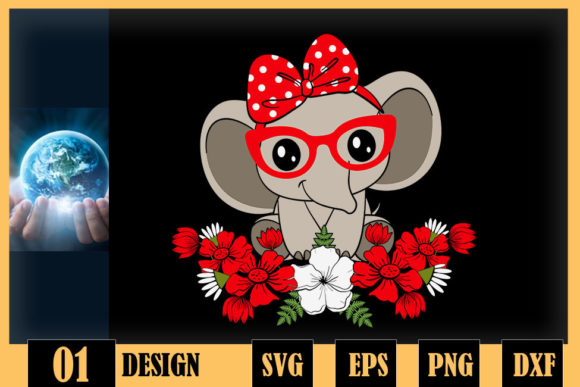
The first thing that strikes me about Save the Elephants Mom Red Bow is its thematic clarity. It blends a conservation message with a touch of playful femininity through the red bow motif. For those of us in the Crafts sector, balancing message and aesthetics is tricky. Too much text can look cluttered; too much detail can turn into a bird’s nest of thread. This design appears to strike a balance that leans toward simplicity, which is often a blessing in embroidery.
The mood is warm and advocacy-driven. It feels appropriate for someone who wants to express support for wildlife conservation while maintaining a soft, approachable aesthetic. The inclusion of the red bow adds a pop of color that breaks up what could otherwise be a monochromatic or heavy silhouette. Visually, it suggests a design that would work well on light to medium-weight fabrics where the contrast can shine. However, before we get ahead of ourselves, we need to talk about the technical reality of turning this Graphics asset into a stitched reality.
Real-World Application: The Tote Bag Test
To truly evaluate a design, I mentally place it on a specific product. Let’s imagine a custom canvas tote bag. This is a staple for Etsy sellers and small shop products. If I were stitching Save the Elephants Mom Red Bow onto a natural cotton canvas, the key concern would be density. Canvas is sturdy, but it can pucker if the stitch count is too high or if the stabilizer is insufficient.
In this scenario, the red bow element likely requires a satin stitch to achieve that smooth, glossy look that defines a bow. Satin stitches are beautiful but unforgiving on textured surfaces. If the underlying elephant silhouette uses a fill stitch, I would want to ensure the transition between the two doesn’t create bulk. A bulky center on a tote bag handle area would be uncomfortable to hold. Therefore, placement is critical. I would position this design slightly off-center, avoiding the stress points of the bag handles.
For custom apparel, such as a sweatshirt, the dynamics change. Fleece and French terry are thick. A detailed design can get lost in the pile. Here, the bold lines of the elephant and the distinct shape of the bow would likely hold up well, provided the stitch density is adjusted for plush fabrics. If the design is too dense, it will feel stiff and crack over time. If it is too open, the fabric will show through, ruining the visual impact.
Navigating Software and File Compatibility
One aspect that requires careful attention with Save the Elephants Mom Red Bow is the software ecosystem. The product description notes compatibility with Cricut Design Space, Silhouette Studio, Corel Draw, Adobe Illustrator, and Adobe Photoshop. This is an important distinction. These are primarily vector and raster graphics programs, not dedicated embroidery software like Wilcom or Hatch.
This means you are likely working with an applique design or a graphic that needs to be digitized, or perhaps a cut file for heat transfer vinyl that mimics embroidery. If you are an embroidery designer planning to use this as a base for digitizing, you have full control. You can decide whether to use running stitch for outlines or fill stitch for bodies. However, if you are expecting a ready-to-stitch embroidery file (like DST or PES) directly from these graphic formats, you may need an intermediate step. Always confirm the file type you are receiving. If it is a SVG or PNG, you will need to digitize it yourself or hire someone who can, ensuring the hoop size matches your machine’s capabilities.
Challenges on Difficult Surfaces
Not every project is a flat cotton tee. Let’s consider a curved surface like a cap. Embroidering on caps is notoriously difficult due to the curvature and the stiffness of the buckram. Placing Save the Elephants Mom Red Bow on a cap requires precise hooping. The red bow, if it has wide satin columns, might pull or gap if the fabric stretches during stitching. I would advise using a strong cut stabilizer and testing on a scrap piece of the exact cap material first.
Similarly, for baby embroidery items like onesies, the fabric is often thin and stretchy. While the message is sweet, the stitch density must be low to prevent irritation against sensitive skin. A heavy fill stitch on a onesie chest is a recipe for discomfort. In this case, I might recommend scaling down the design or simplifying the fill to a lighter pattern. Always prioritize the wearer’s comfort over visual complexity.
Commercial Viability and Brand Consistency
For commercial embroidery projects, consistency is king. If you are building a brand around conservation-themed goods, Save the Elephants Mom Red Bow fits nicely into a broader collection. It appeals to a specific demographic: eco-conscious parents and gift-givers. The "Mom" aspect suggests it could be part of a matching set, perhaps paired with a smaller version for a child’s item.
When creating printable mockup assets for your online store, ensure the colors in your digital preview match the actual thread colors you plan to use. The red in the bow needs to be vibrant. Using a standard polyester thread in a bright red will give you that pop, whereas cotton thread might look more muted. For holiday embroidery gifts, this design could easily transition into a Christmas theme if paired with green accents, expanding its shelf life beyond a single season.
Practical Designer Notes
Before you commit to a full production run or a client order, follow these steps:
- Test on Scrap Fabric: Never stitch directly on the final garment. Use the same fabric type and weight to check for puckering or registration issues.
- Check Thread Contrast: Ensure the elephant color contrasts sufficiently with the background fabric. On dark fabrics, you may need to adjust the design colors or add a backing patch.
- Review Stitch Density: If you are digitizing this from the provided graphics, keep the density moderate. High density leads to stiffness and thread breaks.
- Confirm Licensing: Since this is listed under Crafts and Graphics, verify if the license allows for commercial sale of finished physical items. Some graphic licenses differ from embroidery file licenses.
- Inspect Small Details: Zoom in on the bow’s knot and the elephant’s features. Are there tiny elements that might not stitch out cleanly? Simplify if necessary.
In conclusion, Save the Elephants Mom Red Bow offers a charming blend of advocacy and style. It is versatile enough for tote bags, sweatshirts, and home decor, provided you respect the technical limitations of your materials and machines. By treating it as a design element that requires thoughtful execution rather than a plug-and-play solution, you can create high-quality handmade products that resonate with customers. Whether you are an experienced Etsy seller or a hobbyist making personalized gifts, taking the time to understand the stitch behavior will elevate your final result from good to professional.